When African heads of state and government adopted Agenda 2063 more than a decade ago, the ambition was historic: a fifty-year master plan to transform the continent into a prosperous, integrated, and peaceful powerhouse driven by its own citizens and resources. The blueprint envisioned high-speed rail networks stitching together distant capitals, a continental free trade area unlocking intra-African commerce, and a generation of young Africans equipped to compete in a technology-driven global economy. The vision was bold. The financing, it is now clear, has never matched it.
A Commission Running on Empty
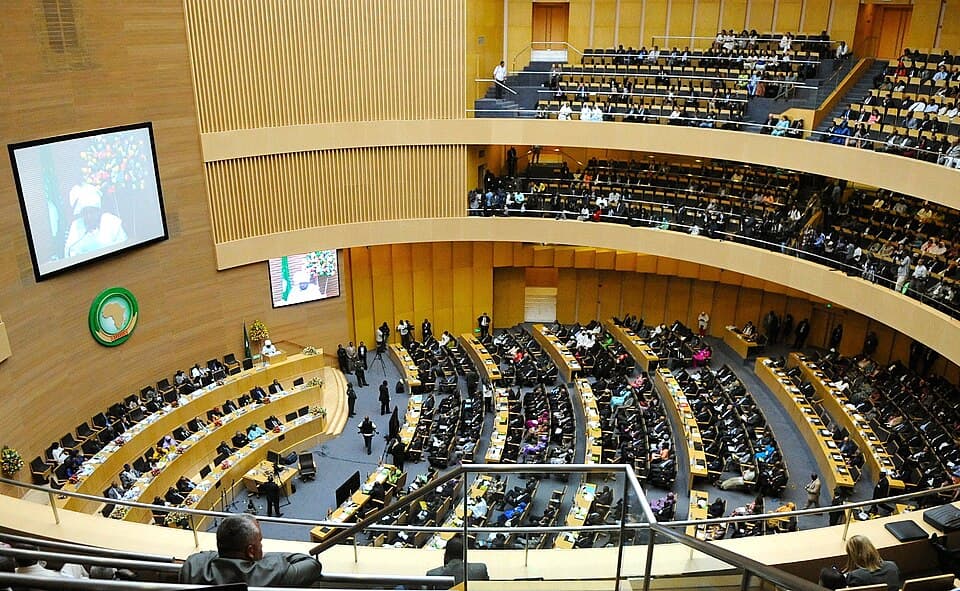
The scale of the institutional strain became unusually visible during the 52nd Ordinary Session of the Permanent Representatives' Committee (PRC), which convened at AU headquarters in Addis Ababa in June 2026. The AU Commission Chairperson, H.E. Mahmoud Ali Youssouf, disclosed that the Commission currently operates with 30% of its required staffing levels and commands only approximately 25% of its global budget — including programmes supported by statutory contributions from member states. Those figures, rarely stated so plainly in a public forum, confirmed what analysts and insiders had long suggested: the secretariat responsible for driving continental integration is chronically under-resourced relative to the mandate it carries.
The Chairperson signalled that the 2027 budget would be structured as an austerity package, a posture that sits uneasily alongside the scale of infrastructure, health, agricultural, and governance programmes Agenda 2063 demands. The Commission has indicated it is developing scenarios to address both human and financial resource gaps, though the specifics of those contingency plans remain to be worked through in dialogue with member states.
A Perfect Storm of External Pressures
The resource crisis does not exist in isolation. AU leadership has pointed to a compounding set of external shocks that are disrupting the continental operating environment. Geopolitical tensions affecting global supply chains, macroeconomic instability across several African economies, delays in fertiliser imports threatening food security, active conflicts in multiple sub-regions, and health emergencies including a recent Ebola outbreak have collectively stretched the organisation's capacity. Disruptions to global maritime routes — including the closure of the Strait of Hormuz — have added logistical and cost pressures that ripple directly into the continent's import-dependent economies and infrastructure pipelines.
For a continental body already operating below capacity, absorbing these shocks while simultaneously advancing long-range development programmes is an extraordinary institutional ask.
The Unity Question
Beyond the financial ledger, AU leaders used the Addis Ababa session to raise a harder, more political concern: whether member states are genuinely aligning their national positions with continental objectives. H.E. Ambassador Willy Nyamitwe of Burundi, serving as PRC Chairperson, delivered a pointed appeal for solidarity over parochialism, warning that national positions can — even unintentionally — erode the institutional coherence the AU requires to function. He framed unity not as an aspiration but as a practical instrument, arguing that the test of the organisation lies not in the quality of its speeches but in the concrete choices ambassadors make when national and continental interests diverge.
That tension is structural. The AU is a member state-driven body, and its Commission can propose, convene, and coordinate, but cannot compel. When member states withhold assessed contributions, delay ratification of continental treaties, or prioritise bilateral arrangements over regional integration frameworks, the downstream effect on Agenda 2063 implementation is direct and measurable.
What Must Change
The path forward identified by AU leadership rests on several pillars. Enhanced solidarity and material support from member states tops the list — a call that has been made before but carries fresh urgency given the disclosed staffing and budget figures. The post-SACA trajectory, referring to internal reforms flowing from a Skills Assessment and Competence Audit of the Commission's workforce, is being positioned as the organisational backbone for improved efficiency even under constrained resources.
Beyond internal reform, the deeper challenge is mobilising the scale of financing Agenda 2063's flagship projects require. The Continental Free Trade Area, the Integrated High-Speed Train Network, the African Outer Space Strategy, and the Single African Air Transport Market are not projects that austerity budgets can drive. They require sovereign commitment, domestic resource mobilisation, credible engagement with development finance institutions, and private sector partnerships built on regulatory environments that African governments control.
The 49th Ordinary Session of the Executive Council, scheduled for late June 2026 in El Alamein, Egypt, will receive the PRC's deliberations and draft decisions. The 8th Mid-Year Coordination Meeting between the AU, Regional Economic Communities, and Regional Mechanisms — also convening in El Alamein — offers another forum to align implementation across the continent's overlapping integration architectures. Whether those meetings produce binding commitments or further rounds of deferred action will say much about the political will available to match the vision already on paper.
Agenda 2063 was always a generational wager. The question now being answered, session by session, is whether this generation of African leaders will fund it.
Open Questions
- What specific contingency scenarios is the AU Commission developing to address the staffing and financial shortfalls, and which member states are being prioritised for direct engagement?
- Which Agenda 2063 flagship projects are most acutely affected by the current resource constraints, and are any facing suspension or significant delays?
- What concrete outcomes and binding financial commitments, if any, emerged from the 49th Executive Council session and the 8th Mid-Year Coordination Meeting in El Alamein?
- How the post-SACA reform process is being implemented in practice, and whether it has produced measurable improvements in Commission operational capacity, remains publicly unverified.
- The full scope and duration of the Ebola outbreak referenced by the AU Commission Chairperson, and its specific impact on AU programme delivery, has not been detailed in available public sources.
- Whether the austerity framing of the 2027 budget represents a temporary adjustment or signals a longer-term structural downgrade of AU ambitions requires further official clarification.


