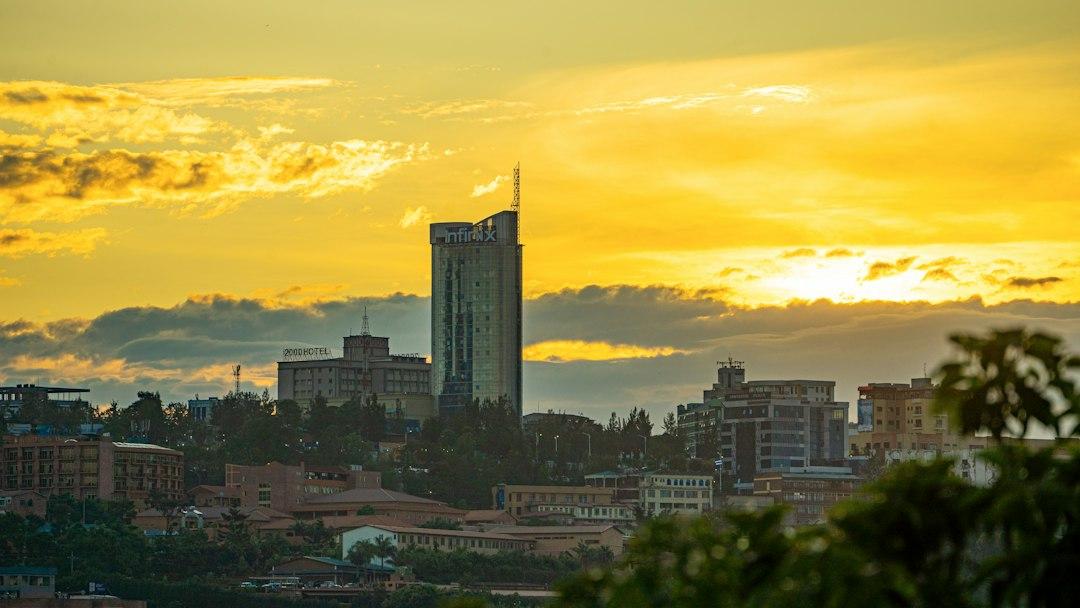
In both Rwanda and Papua New Guinea, only about 10% of the population had electricity in the early 2000s. Both countries have rural populations that are difficult to reach with national electricity grids. Both partly privatised their electricity sectors and set ambitious targets for increased energy access.
Yet by 2025, Rwanda had achieved “one of the fastest household electrification programs in history”, according to a World Bank report, with 41 new power plants, mostly hydro and solar power. The electricity access rate had increased to 85%. But over the same period, electricity access increased to just 20% in Papua New Guinea.
Read more: Rwanda provides lessons on how to narrow Africa’s energy deficit
I research the political economy of mining and energy during green transitions. My latest paper set out to discover why, from similar starting points and facing comparable challenges, Rwanda and Papua New Guinea experienced such different outcomes in their bids to electrify. I analysed hundreds of government, media and private energy company documents from both countries and interviewed 38 energy sector leaders from state-owned energy utilities, private sector energy firms, development banks, donors, and state ministries and agencies for energy, trade and development.
My research found that two factors proved decisive.
First, related in part to contrasting precolonial and colonial histories of state formation, the Rwandan state had a higher level of bureaucratic capacity to design and implement energy sector policy. This accelerated progress faster than Papua New Guinea. Second, Rwanda’s greater commitment to derisking meant private companies were willing to pay for new electricity infrastructure. Derisking involves reducing private sector risk by shifting most of it onto the books of government.
In Papua New Guinea, private investors were especially deterred by not having government guarantees that their electricity would be purchased.
However, Rwanda’s derisking should not be seen as a simple success story for other countries to emulate, because the country is now facing challenges as a result of the generous derisking measures offered to private investors.
Why Rwanda expanded electricity access faster than Papua New Guinea
In Rwanda, the ruling Rwandan Patriotic Front led by president Paul Kagame took firm control of the country after the 1994 Rwandan genocide. From this highly centralised level of political power, as part of a broader welfarist project, the government made electrification a national priority.
In 2008, the government pooled all government and donor funds into the Energy Access Roll-out Programme and came up with a five-year plan to expand the national grid so that more homes could receive electricity. Between 2009 and 2024, the government raised more than US$1.4 billion to pay for the project.
Read more: Africa’s energy sector will need to transform radically - these are the five biggest challenges
The Rwandan national government designed all the policies and made sure that every year, the state energy utility and other state institutions had to meet specific electrification goals in line with an imihigo (performance contract) with the government. This was key to the success of Rwanda’s rapid household electrification programme.
In Papua New Guinea, political instability, a decentralised power structure and a low level of state capacity slowed down electrification. Policy was written up very slowly. The country’s National Electrification Roll-Out Plan was thought up in 2011 but was only approved in 2022.
As the chief executive officer of an energy firm I interviewed said:
There are lots of energy strategies, but they’re not well coordinated or funded.
Agreements to buy power
Rwanda set up power purchase agreements between independent power producers and the state energy utility. These were usually 25-year agreements which provide three levels of derisking to the private investor.
First, the state energy utility commits to pay a fixed, long-term price for the electricity generated. This guarantees cash flow to the investors and means that even if they don’t sell all their electricity, they’ll still be paid for the amount in the contract.
Read more: Nigeria’s post-privatisation energy sector is a mess: here are some solutions
Second, the price the state utility pays for electricity is set in US dollars. If the Rwandan franc weakens, the utility needs more francs to pay the same price. The investor’s dollar earnings are protected, and the utility bears the extra cost. (Most of the private investors are from outside Rwanda and even domestic investors prefer US dollars.)
Third, the government guaranteed the private investors that if the state energy utility didn’t pay them, central government would cover the debt.
Read more: Africa’s funding focus needs to change: the African Development Bank has plans to make that happen
In Papua New Guinea, on the other hand, power purchase agreements were not offered with any state guarantee. This means that if the energy utility defaults on its payments, investors lose out, and so they’re less likely to invest.
The people I interviewed said this was a major problem. A chief executive officer of one of Papua New Guinea’s big independent power producers said that as the country’s energy utility was “basically insolvent”, it was a “huge risk” for any investor.
Tariffs were also typically set or paid in the local currency, exposing investors to currency risk if their value fell.
Impact on Rwanda’s finances
This does not mean that Rwanda’s derisking approach has been without problems. Currently, supply has outstripped demand and there is more electricity available than can be sold. The long term power purchase agreements mean the government locked in to paying for 90% of this unused electricity.
This has become a problem in that Rwanda now needs to spend 2% to 4% of the country’s entire economic output (GDP) on keeping its energy utility afloat, leaving less public funds for other services such as healthcare and education.
Rwanda is now under fiscal pressure, made worse by the fact that the Rwandan franc has lost nearly 50% of its value against the US dollar in the last five years. The Rwandan state now has to absorb this loss.
My research found that while Rwanda’s electrification plan was outwardly successful in expanding access, the government’s commitment to derisking generated increased levels of foreign debt and pressure on public funds, and could leave the country without enough money to develop in other areas in future.
What needs to happen next
The world’s least electrified countries need to expand access to energy. But this must happen in ways that make the countries stronger.
Papua New Guinea constructed a new gas power plant in the 2010s that could be a good model. It’s owned by provincial governments and local landowners, and operated by a state-owned energy company. It was financed using local funds. It provides a concrete and intriguing alternative to the ownership structures predominant in Rwanda.
Ben Radley received funding for this research from The Leverhulme Trust Research Fellowships (RF-2024-066\7).
This article was originally published on The Conversation by Ben Radley, Reader in International Development, University of Bath and is republished here unaltered under a Creative Commons licence (CC BY-ND 4.0, no derivatives). Read the original article.